Learn how Newbold Concrete Stairs precast concrete stair treads can help reduce construction time and costs while delivering high-quality, durable results.
Precast concrete steps have been used on almost every type of building such as residential, commercial, entertainment and municipal buildings. Concrete stairs act as an extension of other structures and enhance the aesthetic appeal of a building by giving it a special identity. They provide easy access to elevated platforms and work surfaces. Concrete stairs can be customized to fit any building. Thanks to the right design, precast concrete stairs can be safe, durable, long-lasting and blend well with other parts of the building.
In this article we will take a look at precast concrete stairs as an easy and cost-effective solution for many construction projects. Precast concrete stairs have been used for years in the construction industry. Among contractors, these stairs are known for their durability and good value for the cost. A main benefit of using precast stairs is time and installation is often quicker than with conventional-cast stairs. Contractors can therefore save money on labor costs and reduce the amount of construction time it takes to get a job done.
About Newbold Concrete Stairs
Newbold Concrete Stairs is a leading precast concrete stair tread manufacturer and supplier. We provide our high-quality products to commercial and residential clients. Our durable products are especially popular for use on monumental feature staircases in office buildings and educational facilities. We are one of the only concrete companies in the world completely focused on concrete stair treads. Many companies do all kinds of concrete work. We prefer to focus. We are confident you'll be happy with our concrete stair tread products.
Pre-Production and Design
Our process begins with the raw drawings that the client's architectural and design team provides. Typically, they provide a building drawing that may or not have sufficient detail. If not, our design team jumps in to fill in the gaps. Depending on where the construction project is in the building process, we may go to the job site to take our own measurements. When we have all the dimensions and information we need, we create our plans and submit them to the architectural and design team for approval. Then we're ready for the production phase.
Fabrication
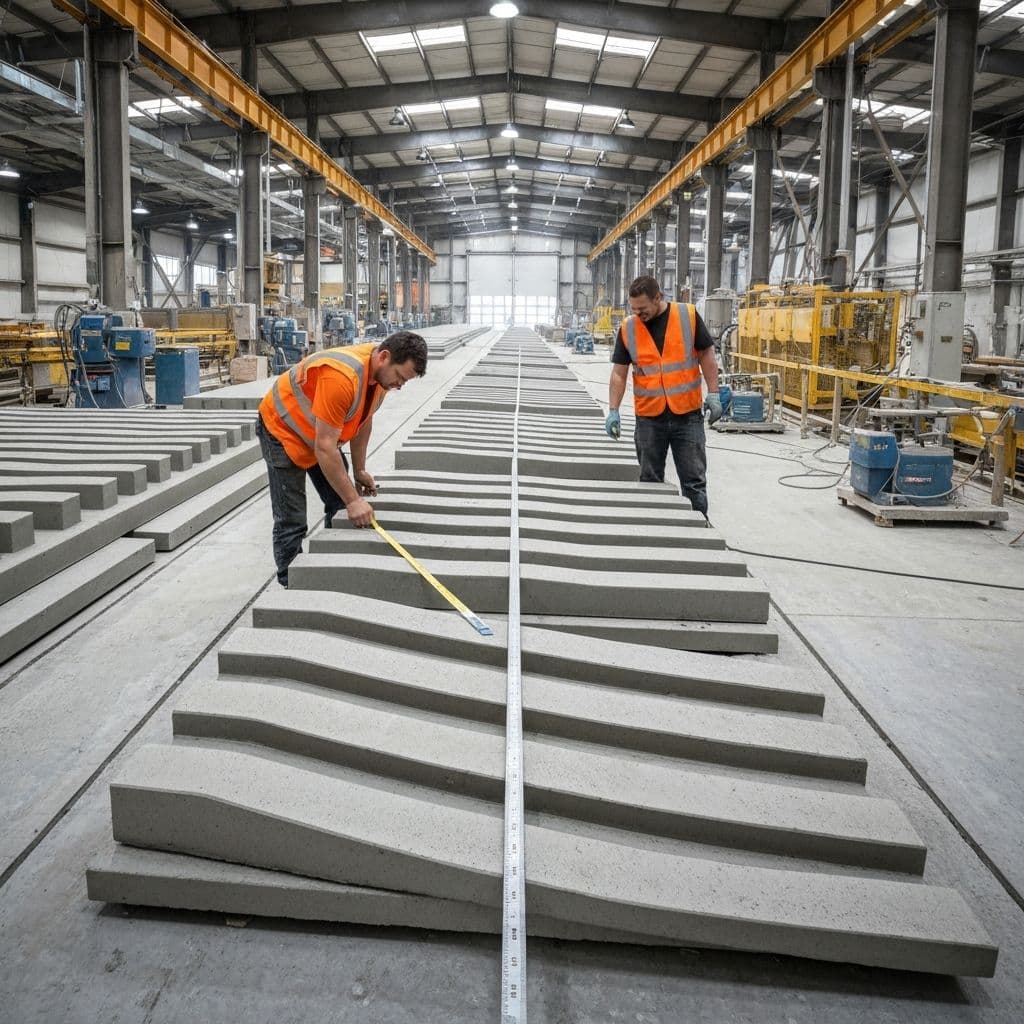
The first step of fabrication is to craft the formwork. This step in the process has to be perfect because the concrete will pick up any detail in the formwork. There are many different ways to go about this. Usually, we'll make a reusable form out of wood, steel, rubber, or plastic, depending on the desired shape and design of your stair tread. We prep it for the concrete, ensuring it's absolutely watertight so the concrete will set well. Basically, we're making a tiny bathtub for the concrete.
The concrete mixture we prefer to use is based on CSA, calcium sulfoaluminate. We don't use Portland cement as often. CSA is both more environmentally friendly and cures faster, so it's better for everyone involved.
When the formwork is perfect, we start casting the concrete. Depending on the situation, it'll take anywhere from a couple of hours to a few days before the concrete stair tread is ready to be removed from the formwork. At this point, we process the treads to your desired finish. Finally, we add any abrasive nosing and do any polishing, acid washing, or sandblasting requested by the client. Now it's time to seal and crate them for shipment to the job site.
Installation
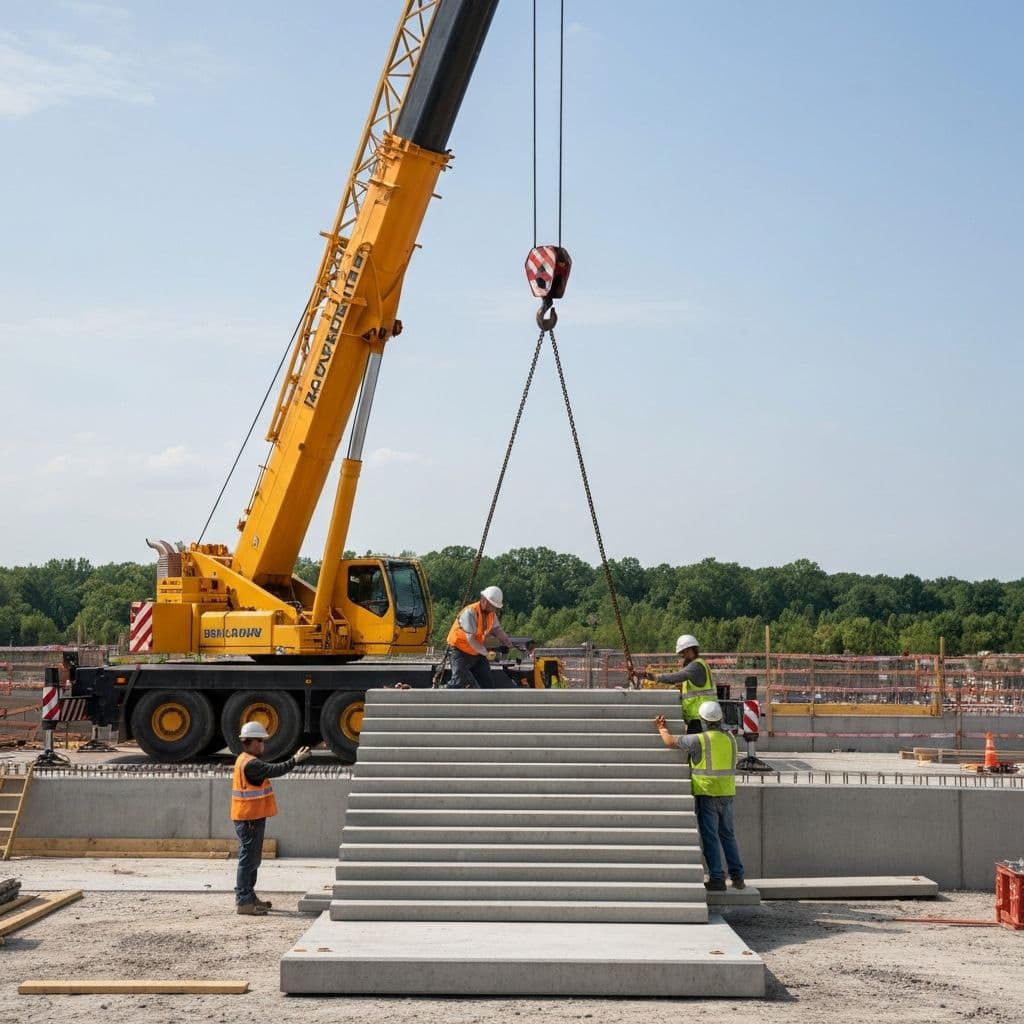
Installation isn't terribly complex. Every job is different, but they all boil down to similar steps. We take the pieces to the job site, set them in place, ensuring they are straight, level, and in-line, and adhere them down with either an adhesive or by bolting them down. If we use an adhesive, we typically go with a polyurethane construction adhesive or an epoxy. We often install the treads using a gantry crane. This enables us to install the heavy concrete stair treads in the safest and most efficient way possible and avoid any injuries to our team.
In many cases, we are also installing the landings. In those cases, we install the landings first, before the stair treads. That's it! Once the job is completed, we send you a care guide for your concrete stair treads. They can be cared for using the same methods as concrete floors.
Benefits of Precast Concrete Stairs
The benefits of precast concrete stairs include:
Reduced construction time: Precast concrete stairs can be manufactured in a factory setting where all the steps are laid out in perfect alignment before they are transported to their designated location. This reduces the time needed for construction.
Lower costs: Since precast concrete staircases are produced in a factory setting, it helps reduce labour costs and other overheads associated with on-site production. It also ensures that the quality of materials used is consistent across all units produced by the manufacturer.
Strength: Precast concrete stairs provide strength and durability that make them an excellent choice for commercial applications as well as residential ones.
Conclusion
Precast concrete stairs can help to reduce construction time and costs, while boosting the value of your property. Stairs are one of the most important elements in any building, as they provide access between floors or levels while adding architectural interest. As you can see, precast concrete stairs can be very useful in providing a quick, cost-effective solution to your construction projects. Whether for new construction or restoration purposes, precast concrete stairs make a great addition to any home or business.